There is no box

thinking out loud about technology, education and life

  • I originally explored this topic in a blog post I wrote back in 2015 on the challenges facing small school districts. While the tech has changed, the core principles of an effective strategy are more relevant than ever. You can read the original post here: LINK


    I remember my first job in education—as the first full-time “IT Guy” for a small rural high school. The prior tech strategy? Outsource to a local tech services company and “keep those eight-year-old computers running indefinitely.”

    This wasn’t just a challenge for me; it was a barrier to learning for every student and teacher.

    Today, with the rise of 1:1 programs and a new focus on AI in the classroom, the demands are higher than ever. Outsourcing to a traditional IT services company simply won’t cut it. They’re business-focused and don’t understand the unique needs of a modern classroom.

    The good news? The solution isn’t about bigger budgets or more complexity. It’s about a new mindset.

    Here are the six pillars of a truly effective edtech strategy for small districts:

    1. Bandwidth & Wi-Fi: Ensure you have enough bandwidth to support every student and teacher on campus. This means simple, modern wireless networks designed for multiple devices per user, not overly complex enterprise solutions.
    2. Cloud-First Infrastructure: Move away from on-premise servers for services like email and file storage. Solutions like Google Workspace for Education (formerly Google Apps) simplify user management and provide robust, secure tools that can be managed from anywhere.
    3. Teacher Empowerment: Give teachers full control over their devices. Locking down systems may seem easier for IT, but it becomes a barrier to dynamic, responsive teaching. Empowering educators builds trust and accelerates technology adoption.
    4. Student Device Strategy: Ditch the static computer lab. Student devices should be mobile, personal, and available when and where they’re needed. This means a shift to 1:1 programs with Chromebooks, iPads, or other simple-to-manage devices.
    5. Human-Centered Support: Design for self-sufficiency. This means training “techie teachers,” empowering students to be tech helpers, and leveraging a support-in-depth model that puts the power to troubleshoot and solve problems closer to the user.
    6. Continuous Professional Development (PD): Technology is a journey, not a destination. PD should be an ongoing, collaborative process, not a one-and-one event. Encourage teachers to connect, learn from each other, and explore what’s possible.

    This model is about more than just technology; it’s about disintermediating the traditional IT stack and putting the power of technology directly into the user’s hands.

    It’s about vision, strategy, and a commitment to empowering your people – staff and students.

    What’s one thing your school or district has done to shift its technology approach and empower educators and students?

    #EdTech #EducationLeadership #K12 #SchoolIT #TechnologyIntegration #FutureOfEducation


    Dr. Andrew Schwab is a K-12 Superintendent, former Chief Technology Officer, and advocate for future-ready schools. He believes that education is the gateway to opportunity and that leadership must be human-centered and student-focused.

  • Back in 2017, I attended the EdSurge Fusion Conference where the focus was Personalized Learning. Even then, presenters admitted we didn’t have a common definition for what that meant, but the future was certain: technology would finally disrupt education in a way no overhead projector, interactive whiteboard, or 1:1 device ever could. Clearly optimism abounds when it comes to predicting technology’s ability to disrupt 150+ years of the entrenched industrial education complex.

    Fast forward to 2025, and now that future actually feels closer than ever. AI has gone from clunky search assistants to tools capable of real-time feedback, adaptive learning, and contextual understanding.

    Here’s how I framed the technology revolution back in 2017—and how it still resonates:

    • Version 1.0: Finding answers faster than we can.
    • Version 2.0: Predicting what learners need before they know they need it.
    • Version 3.0: Giving real-time feedback and shifting instruction from teaching content to teaching strategies.

    Think the Vulcan School AR/VR pod from Star Trek or an Iron Man “JARVIS for every student”. Learning becomes personalized, contextual, and available anytime, anywhere.

    The convergence of AI + Natural Language Processing + Big Data + ubiquitous student access isn’t theoretical anymore, it’s happening now and it’s happening faster than the Internet or web 2.0 ever did.

    After re-reading my original 2017 post (read it here), it’s striking how much of that vision might actually become reality.

    👉 So, 8 years later how should schools, leaders, and communities prepare for AI as a teaching partner—not just another tech tool bolted on to the old industrial model of education?

    #AI #PersonalizedLearning #FutureOfLearning #EdLeadership #K12 #InnovationInEducation


    Dr. Andrew Schwab is a K-12 Superintendent, former Chief Technology Officer, and advocate for future-ready schools. He believes that education is the gateway to opportunity and that leadership must be human-centered and student-focused.

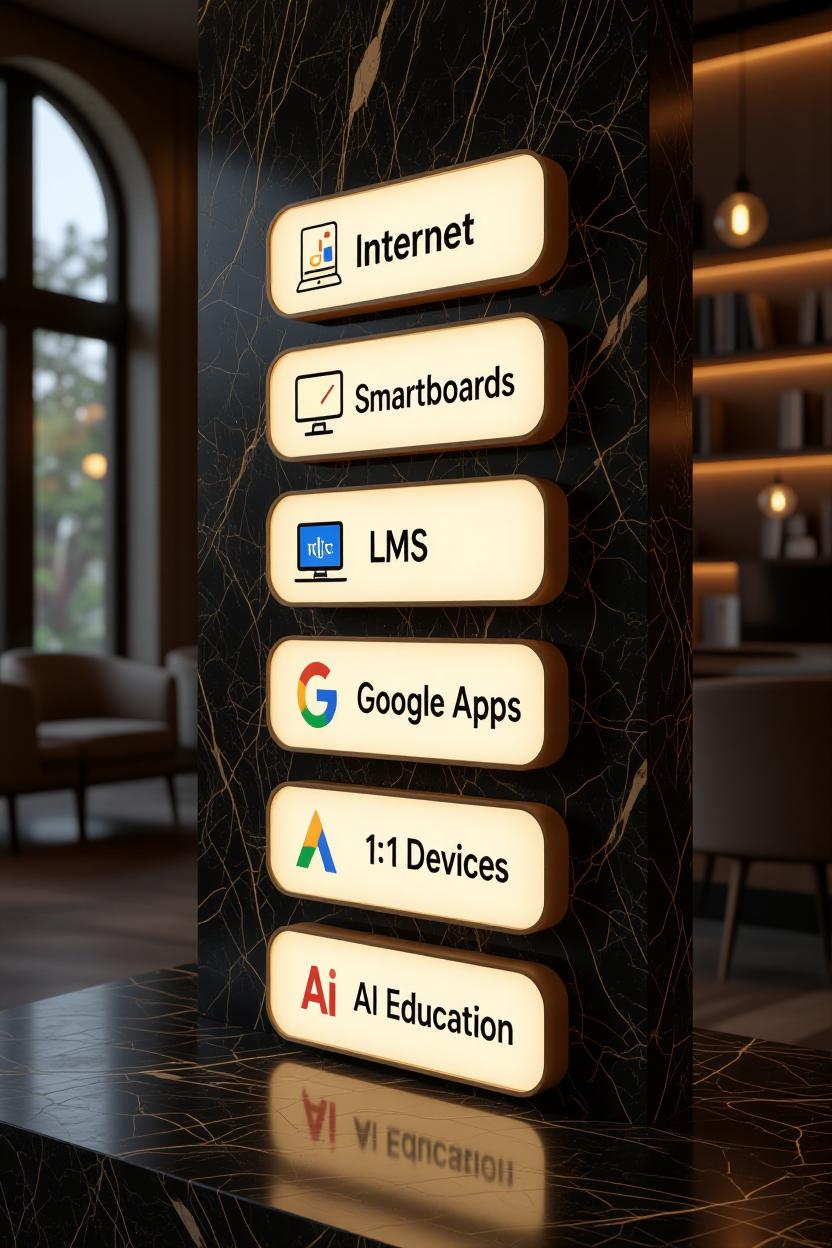
  • AI Image by Grok

    What Education Forgot from the Internet age and What It Can’t Miss Again

    The rise of AI in education is today’s hottest headline. From adaptive platforms to AI tutors and generative content tools, it feels like another “revolution” in learning is upon us. But before we throw ourselves into the next big thing, it’s worth pausing to reflect: What did we learn from the last 20 years of educational technology? And what must we get right this time?

    As someone who has implemented 1:1 programs, rebuilt entire IT infrastructures around learning, and navigated multiple Google Apps migrations over the years, I’ve seen edtech trends come and go. Many promised transformation, few delivered.

    Here are five critical insights from the past that should shape how we lead in the AI present:

    1. Hype Isn’t Implementation
    1:1 devices were going to change everything. So were smartboards. And LMS platforms. And Google search. Each wave came with a surge of vendor promises and a steep learning curve for teachers. The lesson? No technology, AI included, works without intentional leadership, sustained PD, and alignment with actual instructional goals.

    2. Tech Adoption Must Be Human-Centered
    We asked teachers (and students) to learn new tech tools during the pandemic. For many this was overwhelming. AI tools may save time or provide personalized instruction, but if they aren’t simple, transparent, and trustworthy, they will be quickly abandoned. Design for people first, features second.

    3. Automation Can’t Replace Connection
    AI might write a quiz or provide real time feedback, but it cannot replace the empathy, nuance, or relationship of a master teacher in the classroom. Just as past efforts to script instruction failed to scale good teaching, efforts to automate it will miss the mark unless guided by human wisdom.

    4. Infrastructure, Infrastructure, Infrastructure
    No matter how intelligent the algorithm, it’s useless if the WiFi is down. Investment in robust, equitable infrastructure is the foundation of any AI-enhanced future. Devices, broadband, and security are not optional, they are a basic necessity.

    5. Equity Is the Metric That Matters
    Like previous edtech waves, AI could deepen digital divides if issues like access, training, and thoughtful integration aren’t prioritized. We must avoid compounding systems of haves and have nots where affluent districts get AI copilots and underserved schools get AI compliance bots.

    So What Now?

    AI is not a silver bullet to all of education’s woes. The goal should not be an AI-powered classroom. It should be a student-powered future. We’ve been down this road before. Let’s bring the lessons forward for the future.

    How will this time be different?


    Dr. Andrew Schwab is a K-12 Superintendent, former Chief Technology Officer, and advocate for future-ready schools. He believes that education is the gateway to opportunity and that leadership must be human-centered and student-focused.

  • There was a time when my days revolved around system uptime, network cables, and servers. I architected networks, managed systems, and made sure email never went down. Life was simple.

    Then I became a classroom teacher, and suddenly, nothing was simple anymore. I started looking to places like Minarets High School that were pushing the boundaries of student trust and teacher empowerment, using technology not for it’s own sake but as an instrument capable of transforming the learning process to focus on individual students instead of teaching to the middle.

    I started reading books like DriveThe Tipping Point and Disrupting Class that opened my mind to challenging the status quo. I found pioneers like Sugata Mitra who was showing how the intersection of technology and humanity had the potential to disrupt the foundational beliefs that the education system was built on, and somewhere along the way I stopped being just an IT guy and started being an educator. I realized that technology in schools wasn’t just about devices or data; it was about learning. And once you see technology through that lens, you can’t unsee it.

    Back then, I was frustrated that school business leaders saw technology as a cost to be contained while curriculum and instruction leaders saw technology as something to be defined by a box, professionally developed and only used to address targeted deficiencies in learning and not as the catalyst for a transformational shift in instructional practice that it could be. I believed many technology leaders were caught in the middle and I imagined both the Business and C&I people were about to have their worlds upended by an education technology tidal wave that was coming, a rogue wave that was going to catch many unprepared.

    The rogue wave isn’t coming. It’s already here. 🌊 ESSR funds hit districts with nearly unlimited funds that flooded into technology departments. The aftermath of all that spending is still yet to be determined. But one thing remains true, fusing technology and instruction is a non-negotiable and finding sustainable funding to support technology is a critical strategic imperative for district leaders. Networks, devices, and cloud services are commodities. Infrastructure is no longer the problem. Sustainability and alignment are.

    The divide today isn’t between IT and C&I or IT and the Business department, it’s between those who see technology as a strategic catalyst for transformational change and those who want to maintain the status quo. Ubiquitous connectivity, personalized learning, and Artificial intelligence are rewriting what’s possible in classrooms. Yet many schools are still operating with 20th-century mindsets:

    • Annual PD days instead of continuous learning
    • Tech plans written in isolation from instructional strategy
    • Leaders who haven’t invited their technology directors to the decision making table

    In the age of AI, what matters is whether our systems are human-centered, pedagogically aligned, and built to adapt. Districts that build sustainable funding models, empower teachers to innovate, and treat technology as an enabler instead of as an expense will thrive in a post-ESSR funding world. Those that don’t take this opportunity to reimagine how technology fits in their strategic vision will struggle to maintain the future ready shifts made during the pandemic and won’t be prepared for the coming AI wave that is waiting out there.

    For leaders still caught between tech as fundamental and tech as extra, the challenge is clear:
    ✅ Build resilient, forward-looking infrastructure
    ✅ Treat technology integration as a leadership competency
    ✅ Invest in teacher tech capacity as relentlessly as you invest in bandwidth

    Because yes, technology may be “just a tool.”
    But then again so was the printing press.

    👉 Is your district riding the wave,or waiting to be hit by it?

    >The original blog post that inspired this reflection can be viewed here.

    #EdTech #K12Leadership #FutureOfLearning #AIinEducation #DigitalTransformation #EducationLeadership #Superintendent #InstructionalLeadership #ChangeManagement


    Dr. Andrew Schwab is a K-12 Superintendent, former Chief Technology Officer, and advocate for future-ready schools. He believes that education is the gateway to opportunity and that leadership must be human-centered and student-focused.

  • What follows is from a draft I wrote coming out of the Pandemic and never published, because frankly I stopped blogging and podcasting during COVID and couldn’t find the headspace to come back to it. Recently, I’ve been playing around with AI tools using my old content, and I was struct by how much has changed, and also by how much really hasn’t. It’s interesting to be able to go back in time and see and hear my thoughts from my educational journey over the years. It has me thinking I might start up blogging and podcasting agin, now that podcasting is cool. Anyway, here is me from the past, thinking about the future of education in a post-pandemic world:

    The past decade has revealed the cracks in our educational systems, but the last few years have blown them wide open. From outdated funding formulas to antiquated professional preparation and the accelerating pace of technological change, it’s clear we can’t fix the system with the same thinking that created it.

    As an educational leader who has worn the hats of teacher, tech director, non-profit board member, Chief Technology Officer, Assistant Superintendent, and Superintendent, I’ve lived this disruption firsthand. Reflecting on years of blogging and frontline experience, five truths continue to guide my work and might help others navigating similar waters:

    1. Stop Funding Based on Seat Time
    In California, we fund schools based on Average Daily Attendance, not learning. It’s a system that rewards presence, not progress. A student could be present 100% of the year and learn nothing, while another misses 20 days and aces everything. Guess which one generates more money for the school? It’s time to move past funding based on time in seats.

    2. Colleges of Education Must Evolve
    Too many teacher prep programs are relics of another era, designed for classrooms with desks in rows, a whiteboard at the front, and content as king. This must change. Teachers should graduate fluent in teaching skills and strategies; classroom management, behavior support, technology integration, collaborative learning, and sparking creativity, the very skills we expect them to instill in students.

    3. Technology is Strategic, Not Support
    Technology isn’t just about fixing printers or managing WiFi. It is the connective tissue of modern learning environments. From Google Workspace migrations to student-centered WiFi networks, IT must sit at the leadership table. When we empower tech to be strategic, we empower every classroom to be Future Ready.

    4. Teaching is a Craft, Not a Commodity
    The myth of mass-producing effective teaching through boxed curriculum and scripted lessons (or AI…) ignores a central truth: teaching is human work. Master teachers are master craftspeople. What they need isn’t more pacing guides or rote standardization. They need clarity of purpose, time, collaboration, autonomy, mastery and support.

    5. Equity Requires Real Structural Change
    COVID-19 didn’t create inequity. It exposed it. Access to broadband, basic nutrition, and healthcare were never equally distributed. During the pandemic, schools tried to fill every gap but we need systems of support that do more than lean on public education as a catch-all. Equity demands we reimagine not just instruction but community infrastructure and the core purpose of public school.

    I am hopeful that we’re not going back to the past. Nor should we. The question is: what are we moving forward into? As leaders, our role is to co-create the future, one where systems flex for students, where professionals are empowered to do the work, and where education is not confined by outdated assumptions.

    There is no box. Let’s build something better from the ground up.


    Dr. Andrew Schwab is a K-12 Superintendent, former Chief Technology Officer, and advocate for future-ready schools. He believes that education is the gateway to opportunity and that leadership must be human-centered and student-focused.

  • After a few decades in education and technology leadership, I’ve lived through more “transformations” than I can count: Smartboards, the Internet, netbooks, 1:1 rollouts, LMS revolutions, Google Apps migrations, remote learning, and now AI. Each wave has taught me something new—and often, reminded me of something we forgot along the way.

    These are my top 10 lessons learned from the front lines of EdTech implementation, strategy, and leadership:

    1. Tech Is Easy. Change is Hard.
    Deploying devices is straightforward. Shifting mindsets, building trust, and supporting change in practice? That’s the real work.

    2. Equity Is Infrastructure.
    If every kid doesn’t have reliable internet, a functional device, and access to support, then every initiative that follows is built on sand.

    3. Don’t Chase Shiny Objects.
    Cool demos sell hardware. But good leaders ask: Will this make learning better, more equitable, or more human?

    4. PD Isn’t Optional.
    You can’t drop devices or AI tools into classrooms and expect magic. Teachers need training, time, and community to innovate.

    5. Your IT Team Needs a Seat at the Table.
    Technology is a strategic function, not just a support service. When decisions are made without IT input, problems multiply.

    6. Pilot First. Build Support. Then Scale.
    A good pilot solves real problems and builds internal champions. A bad one wastes resources and burns trust.

    7. Vendor Promises Are Just That.
    Every product “integrates seamlessly” and “personalizes learning.” Believe it when it works in your district, for your teachers, with your kids. Avoid vaporware and new features coming soon syndrome.

    8. Build Systems, Not Silos.
    Tech that doesn’t play well with your SIS, rostering, or identity management will cost time and trust. Only go there if you absolutely must.

    9. Change Fatigue Is Real.
    Initiative overload erodes morale. Space out your innovations, communicate clearly, and honor the adoption curve.

    10. The End Goal Is Learning, Not Technology.
    Never forget: The tech is a means to an end. If it’s not enhancing engagement, deepening understanding, or expanding opportunity for student success, it’s not worth doing.

    What lessons have you learned along the way?


    Dr. Andrew Schwab is a K-12 Superintendent, former Chief Technology Officer, and advocate for future-ready schools. He believes that education is the gateway to opportunity and that leadership must be human-centered and student-focused.

  • I’ve got this archive of content from two podcasts from long ago, before podcasting was cool and mainstream, where I’m talking with smart and interesting people about the future of education, edtech and teaching and learning in the “digital” age.

    In revisiting a few episodes, it ridiculous how optimistic I was that by now we would be having much different conversations about teaching and learning because technology would have disintermediated the existing knowledge-information power paradigm. But no, we’re still having the same conversations because naive me didn’t realize that the status quo has too much mass and too few incentives to be easily overcome. It’s all still here: seat time based learning expectations – check, content as king – check, test scores define success – check, devices as textbook replacements – check, digital literacy talked about but not taught – check, classroom expectations for tech not aligned to outside the classroom reality of use – check, digital divide – check, pacing guides and factory based model – check.

    The promise and potential of the return to a more human, personalized and relevant model of education that technology tools make possible has yet to materialize as a systemic path forward. To be sure there are pockets of innovation that exist today, places that are disrupting the status quo and providing next level, future forward learning experiences for kids but drop anyone from the 50’s into the majority of classrooms of today and they’d find the format, routines and expectations reassuringly familiar.

    The illiterate of the 21st century will not be those who cannot read and write, but those who cannot learn, unlearn, and relearn.  – Alvin Toffler

    Enter AI. AI might just be the thing that can overcome the mass of the status quo in a way that even the disruptive nature the Internet and one-to-one devices couldn’t do in Education (that’s education with a big E as in THE SYSTEM). AI’s acceleration curve is straight up and it’s only a matter of time, so I thought I’d get back to my roots and start playing around with AI tools to see what’s possible for AI to take some content (my old podcasts) and do something interesting with them.

    I started with a simple prompt in ChatGPT – Summarize this podcast, to which ChatGPT said it did not have access to the Whisper transcription library. Ok. I asked it how I could get access to the Whisper libraries, and low and behold, it gave me a few options with step by step instructions:

    What ChatGPT just spit out in 20 seconds is the kind of thing I could get out of Google in 10-15 minutes of searching technical forums online 20 years ago. Back then search was a superpower, now? AI seems superhuman.

    I’m off to install Whisper and see if I can summarize a podcast episode and then, who knows what else I can collaborate with AI on… the possibilities seem limited only by my imagination.

    Creativity can solve almost any problem. The creative act, the defeat of habit by originality, overcomes everything. – George Lois

    From the Archives: RebootED – Pilot Episode

  • Life near(ish) to a Space Force Base!

    rocket trail

    Rocket launch trail in the sky

  • 50…